Showing posts with label Evin. Show all posts

Monday, July 31, 2017

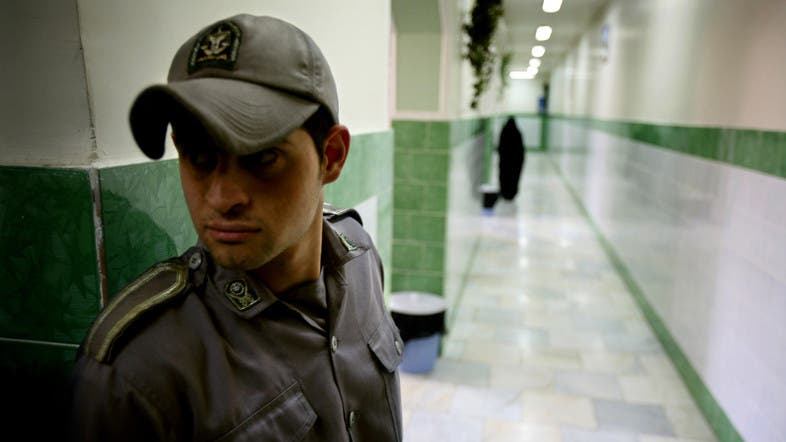
Evin Prison: The Iranian regime’s notorious torture factory


By Tony Duheaume 
Special to Al Arabiya EnglishSunday,
sunday, 30 July 2017 


The Iranian regime lives in constant fear of an uprising to overthrow it. Such is its paranoia where opposition groups are concerned it has spent the whole period of its existence, eliminating dissenters.

The approach to any form of opposition shows how insecure this regime has become. But as far as extreme brutality is concerned, it could not be more prevalent than that of the regime’s treatment of dissidents at Evin Prison, where guards use torture to humiliate their captives before executing them.

Through the despicable acts taking place here, the lack of humanity shown by the prison authorities toward all those who speak out against the regime, mirrors the insecurities of the entire state.

Located at the foot of the Alborz mountains in northern Tehran, Evin Prison was originally constructed in 1972, under the reign of Mohammad Reza Pahlavi. It was then operated by his infamous security and intelligence service (SAVAK).

Opponents of the Shah


Opponents of the Shah
Thousands of political prisoners were incarcerated there during that period, including many supporters of the Peoples Mojahedin Organisation of Iran (PMOI/MEK), fierce opponents of the Shah, and it was from this point on, its reputation of hell on earth had begun.

With Evin Prison being one of the most notorious prisons in the world, just the mention of its name conjures up emotions of fear and foreboding in the hearts of ordinary Iranian citizens, as it has become synonymous with political repression, mass hangings and torture.

This infamous place is where those entering find themselves at the mercy of brutal prison guards, who at this point in time, operate under the control of the Islamic Republic of Iran’s Secret Service (VAVAK).
Female prison guards walk along a corridor in Tehran's Evin prison June 13, 2006. (Reuters)

No legal representation


Female prison guards walk along a corridor in Tehran's Evin prison June 13, 2006. (Reuters)

No legal representation
Teachers, writers, journalists, students, lawyers and academics, in fact anyone who speaks out against the regime, can find themselves thrown into Evin Prison. After trials without legal representation, the accused are found guilty of vague crimes on erroneous evidence, and are either condemned to serve long prison sentences.

Although the Iranian regime has continuously denied it, Evin Prison is known to be a virtual torture factory, where countless numbers of inmates have met their fate. Due to the number of intellectuals imprisoned within its walls, the prison has been nicknamed Evin University.

With Evin being a prison that is extremely overcrowded, hygiene is poor and in Iran’s sweltering hot summers, the heat can reach up to 45 degrees Celsius. There is no form of air conditioning, and the air within cells becomes rank with sweat and human waste. Water quality is bad and food comes in meagre portions and is barely edible. Medical facilities are virtually non-existent.

Breaking resolve


Breaking resolve
This whole process is designed to break the resolve of political prisoners, where the pressure for a confession is kept up until the captive breaks his silence. Then designed to add to this anguish, all contact with the outside world is cut off, family visits and telephone calls are forbidden, and even the guards are ordered to be silent.

Countless numbers have been driven insane by this treatment, many smashing their heads against the wall of their cell in anguish, while others have attempted suicide, but such is the security at Evin, no prisoner has been known to have escaped.

Inside Evin’s fetid dungeons, there are vents on the wall opposite the window, where a sturdy metal door stands, and at the bottom of the door is fitted a flap, for the prison guard to slide food through to the prisoner, while at the top of the door there is a flap used for communication.

One group of prisoners that has suffered the most at Evin Prison is the PMOI/MEK, thousands of its members have been held there over the years since the revolution.
Iranian women prisoners sit inside their cell in Tehran's Evin prison June 13, 2006. (Reuters)

The 1988 massacre


Iranian women prisoners sit inside their cell in Tehran's Evin prison June 13, 2006. (Reuters)

The 1988 massacre
With countless numbers having been incarcerated at the time of the now infamous 1988 massacre, thousands of their number can be added to the 30,000 dissidents that were murdered across Iran. This was done under the orders of the then Supreme Leader Ruhollah Khomeini to execute all those who opposed his regime.

After the execution, corpses would be transported in the dead of night to one of the numerous mass graves, which came in the form of deeply dug channels, secretly excavated in various isolated locations across the country, areas dubbed by their executioners as Lanat-Abad (The Place of the Damned).

But to this very day, nothing has changed at Evin. Untold abuses still take place, while the words of human rights activists fall on deaf ears. Rather than denouncing the regime with the harsh condemnation it rightly deserves, the world has virtually ignored the abuses carried out in its prisons and on its streets, offering the leadership more in the way of lucrative transactions like the Iran Deal, rather than that of hard-hitting sanctions that cut deep.

Disclaimer: Views expressed by writers in this section are their own and do not reflect Al Arabiya English's point-of-view.


Thursday, July 20, 2017

MULLAHS USE EUROPEAN POLITICIANS TO WASH IRANIAN’S BLOOD OFF THEIR HANDS


By Zohair Ahmad
On July 5th, 2017, there was a well-orchestrated visit by European politicians from 45 different countries, to the notorious Evin prison in Iran. This visit is the latest attempt from the Mullahs regime to repeal claims of human rights abuse in Iranian prisons. The day before the visit, Javad Larijani, the head of the Iranian regime’s so-called «Human Rights Organisation», claimed there are no political prisoners in Iran.ث
Following the visit, Tasnim News Agency, which is close to the hardliners in Iran claimed that several Ambassadors were astonished by the quality of the prison. What a shame, it is a disgrace that politicians are so caught up with profit that they choose to ignore the truth about Iran regime’s human rights abuses, not only against prisoners but also against ordinary citizens.  None of the Political Prisoners who are serving time after bogus trials participated in the meetings. According to a political activist who spent 13 years in prison all visits are staged, they prepare a room and a few specially selected prisoners. It is a known fact that authorities have closed Evin prison to independent international and national human rights investigators for more than a decade.  Meanwhile, political prisoners continue to linger under unbearable conditions in prisons that no foreign diplomat is allowed to visit. 
In an open letter to human rights activists, political prisoner, Reza , Monfared, incarcerated in Gohardasht prison, in his letter he spoke of the more than 60 condemnations on the regime for human rights abuses, he also told about mothers whose 6 children were killed by the mullahs regime. He asks us this question; if the regime is honest in its claims why did they not allow  Mr. Ahmad Shaheed, the former UN special rapporteur to visit the country, and also despite insistence of Ms. Asma Jahangir, the UN special rapporteur for human rights in Iran, why does the regime not allow her to meet and speak with the political prisoners and prisoners of conscience in various prisons across Iran?

The last UN delegation who was allowed to visit Evin was the Working Group on Arbitrary Detention and the Special Rapporteur On the promotion and protection of the right to freedom of opinion and expression in 2003, including Ward 209, where political prisoners are kept under Ministry of Intelligence supervision. As of today, there are at least ten standing requests by different UN human rights experts to visit Iran, in addition to regular requests from human rights groups, including Human Rights Watch, to meet with officials in Iran and discuss rights concerns with them.

According to the latest report from Amnesty International (2017), the situation is not as good as portrayed in this staged visit. the report speaks of how women are marginalized by laws that give the father right to marry a girl off at the age of 9, that means also that she will be considered an adult at the age of 9 and can be sentenced to death. Compulsory veiling (Hijab) laws violate women’s rights to equality, privacy, and freedom of expression, belief, and religion. This law empowers police and paramilitary forces to target women for harassment, violence and imprisonment.

  The Regime plan to execute 120 prisoners the authorities continue to use the death penalty extensively, including against juvenile offenders and this visit from European politicians will only empower the regime and we will see a rise in executions across Iran.


Wednesday, July 12, 2017

Why Are Suppression and Arrests Ramping up in Iran?

Iranian political prisoner, Majid Assadi


INU Staff writer, July 9, 2017 - According to reports obtained from inside Iran, the past months have seen a spike in arrests and executions. In fear of mass anti-state protests similar to those that took place in 2009, the regime has resorted to raid the homes of political and human rights activists in Iran, especially the supporters of the main resistance group People’s Mojahedin Organization of Iran (PMOI/MEK).
This happens against the backdrop of a widespread campaign in Iran condemning the regime’s three-decade-long crimes in the country’s prisons, especially the massacre of 30 thousand political prisoners in the summer of 1988.
One of the more recent cases is that of Majid Assadi, 34, who lives in Karaj, 40 km west of Tehran. Holding a degree in economics from the Alameh Tabatabai University, Assadi is a student activist, former political prisoner, and a supporter of the MEK.
On February 18, 2017 agents of the Ministry or Intelligence and Security (MOIS) arrested Assadi after they violently broke into his father’s home in Karaj.
The ten armed MOIS agents arrested Assadi and ransacked his house without any warrant.
At the time of the arrest, the agents also harmed Assadi’s ailing father, who had just undergone a liver implant surgery as part of his cancer treatment.
The agents handcuffed Assadi in front of his family and interrogated his family in his presence to torment him. They then confiscated all of his personal belongings, including his personal computer, phone and books.
Assadi was subsequently transferred to the Karaj intelligence office, and from there to Evin prison’s ward 209, where political prisoners are held. He spent 50 days in solitary confinement, under severe mental pressure and interrogations.
Since the time of his arrest, Assadi has been held in a state of limbo. After lingering in wards 209 and 240, he was transferred to Gohardasht prison in recent weeks.
According to the latest reports, Assadi is now in Gohardasht and his case remains unsettled.
In 2008, Assadi was arrested for attending a ceremony to commemorate the anniversary of the 1999 student protests in Tehran. Assadi was held in solitary confinement for 52 days.
In 2010 he was given a four-year prison sentence. His appeal request was rejected, and he was imprisoned from 2011 to 2015.
At present, Majid Assadi’s family have called on human rights organizations and other relevant international bodies to help save his life and deliver him from the dungeons of the Iranian regime, where human rights activists are executed and tortured to keep the mullahs in power.

Friday, June 30, 2017

Messages of Solidarity for a Free Iran From Brave MEK Prisoners

Iran Focus

London, 30 Jun - Political prisoners have always embodied the aspirations and desires of their nations under the yoke of dictatorships. In Iran, too, political prisoners put their lives on the line to express what many people do not dare to express.
As the Iranian opposition is about to hold its greatest gathering ever in Villepinte, Paris, on Saturday, July 1, political prisoners have sent their messages of solidarity and support for the MEK and the Iranian opposition from inside their prisons.
One such prisoner is Mr. Ali Moezzi, 66. He was also a political prisoner in young age, in the 1980s for supporting the MEK. Now, his two daughters are with the MEK, and he has been imprisoned on and off several times since they joined the MEK in Ashraf.
In his message, he wrote, “This gathering echoes the cries of all the enchained people of Iran. It echoes the voice of the deprived, the toiling porters in Kurdistan, the voice of the Sunnis, our Baluchi compatriots, and everyone else. It manifests the pride of Iran and Iranians, it is the symbol of their organized resistance, the democratic alternative and the flag they have hoisted for resistance at any cost to achieve freedom.
“The Iranian people’s historic demands to reach a free and democratic Iran will never be forgotten. Demands such as a pluralist society with fundamental freedoms, separation of religion and state, rights of ethnic and religious minorities, gender equality…
“Mrs. Rajavi was right to say that our only asset is Resistance. She spoke of 1000 Ashrafs and of 1000 bastions of rebellion and resistance. She was right when she said no to the white turbans and the black turbans. Because any effort for a free Iran and a democratic future is not tolerated by the Velayat-e Faqih regime.
“Now, from the corner of this prison cell, I see myself with you and among you in the great and glorious gathering of this year in Paris on July 1. With pride and heart-felt love and hope, I hail each and every one of you who add to our nation’s asset of determination and faith. Hail to you, the delegations, the distinguished guests and hail to Maryam Rajavi, the shining sun and the great honor of Iran.”
Mr. Moezzi was last arrested in 2011, after he participated and gave a speech in support of the MEK in the funeral of another political prisoner, Mohsen Dokmehchi.
Mr. Dokmechi was a renowned Bazaar merchant who supported the MEK and assisted families of MEK martyrs and political prisoners. He had cancer while in prison but was deprived of treatment. Prison officials let him gradually die by going through tremendous suffering.
Mr. Moezzi completed his sentence two years ago, however, officials do not release him and have filed new spurious charges against him.
In January, he was kidnapped from Gohardasht prison after a family visit as he was returning to his cell. He was missing for a long time, until news came that he was under harsh interrogation in solitary confinement in the notorious Ward 209 of Evin Prison.
Now, he is in the Greater Tehran Prison which is a concentration camp. Nearly 70 prisoners have been packed into Mr. Moezzi’s cell made for only 25 men. This is where he wrote his message of solidarity with the great gathering of Iranians for a free Iran.
Another resistant prisoner, Mr. Arjang Davoudi, sent a message of solidarity to the MEK and Iranian opposition gathering in Villepinte. He wrote in his message, “It is not any exaggeration if I honestly and explicitly say that presently, the People’s Mojahedin of Iran (MEK), is the oldest and most organized part of the potential alternative that manages the nationwide struggle of the Iranian people for freedom from the clutches of Khamenei’s mafia and his partners.
“The MEK has become indispensable to our struggle. Therefore, I urge everyone who loves to see a free Iran and thinks of the pride and honor of Iranians to make their best effort to take part in this great gathering in Paris and make this gathering more glorious with their presence.
“We should know that extensive participation of freedom-loving Iranians in such events is greatly heartwarming for resistant prisoners who linger and spend their nights and days inside the Iranian regime’s medieval dungeons.”
Abolghassem Fouladvand also wrote from his confinement in Gohardasht Prison. Mr. Fouladvand is also imprisoned for his support for the MEK.

In his letter from prison, Mr. Fouladvand wrote, “It is time to rise up. The galaxy of freedom, is marching on with strength and determination to overthrow the clerical regime. I would like to join this galaxy and be along your side and stand beside true Iranians, and freedom-loving Iranians. I want to stand with the family of Resistance and the Army of Freedom.
“With such participation and support, I say another resounding NO to the clerical regime and declare my all-out support for the only organized resistance in Iran and abroad. We must know that at this time, there is no middle. Remaining silent and passive is not any different from standing in the ranks of the mullahs.
“I hope that with your active presence, you would be my voice and the voice of my other imprisoned comrades.”
Mr. Fouladvand is married and has two sons. He has two brothers in the MEK.
Shahin Zoghi-tabar is another political prisoner who has been detained for his activities for freedom and in support of the MEK. In his letter from Gohardasht Prison in Karaj, Mr. Zoghi-tabar wrote, “Your presence in the great gathering of the Iranian Resistance is not only a form of declaration of support for the Iranian opposition, but also echoes the voice of the oppressed women of Iran and the child workers. You can be the voice of Iran’s workers, nurses and teachers… By participating in this gathering show the world that the Iranian people’s choice is not the mullahs or the IRGC. Rather, their choice is resistance for freedom.”
Many of those arrested and imprisoned on political grounds in Iran are supporters of the main Iranian opposition force, the MEK or PMOI. They are arrested for their activities to expose the regime’s violations of human rights or for giving financial aid to the MEK.
The activities of MEK supporters during the recent presidential election sham, calling for the boycott of the election, terrified the clerical regime to a great extent. Also their calls for justice for those in charge of the massacre of 30,000 political prisoners in 1988 foiled the efforts of the mullahs’ supreme leader Ali Khamenei who favored presidency of Ebrahim Raissi from his own faction.
Ebrahim Raissi was a member of the Death Committee in charge of implementing death decrees for prisoners who did not renounce their support for the MEK even at the cost of their lives. The public’s outrage over Raissi’s nomination forced Khamenei to back down from his desire and let Rouhani have a second term in office.
The regime’s officials including Khamenei, himself, are seriously alarmed by the presence of the MEK and extensive support for them in society and have stepped up their misinformation against the MEK in the state-run media.
It is in such circumstances that these political prisoners and many others have taken the risk of publicly lending support to the MEK and the Iranian opposition for their annual gathering.

Mattis: Delay in Syria chemical investigation ’unfortunate’

US Defense Secretary Jim Mattis Orient Net, April 19, 2018 -- US Defense Secretary Jim Mattis said on Wednesday (April 18) that a delay i...